
Richardson, TX Cost Comparison
Heat Pump vs Gas Furnace in Richardson, TX: Which Is Cheaper to Run?
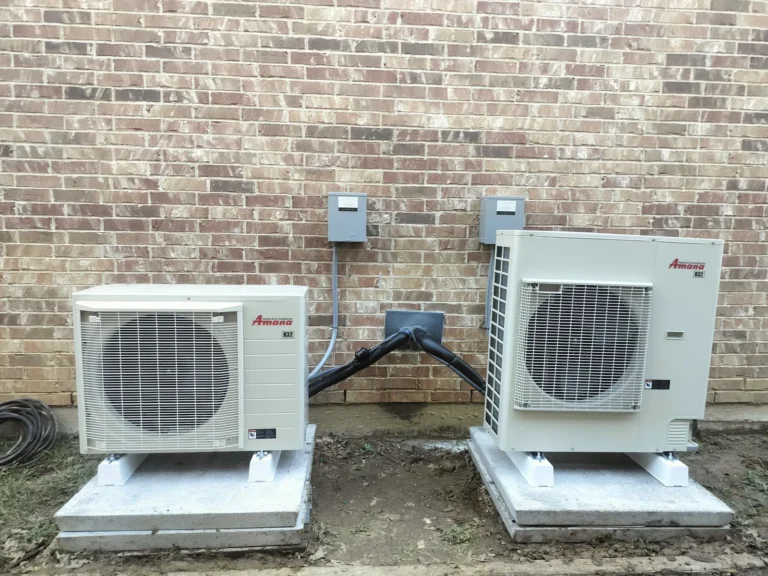
A heat pump is slightly cheaper to run than a standard 80% AFUE gas furnace in Richardson, and roughly even with a high-efficiency 95% AFUE furnace.
By Richardson TX HVAC Hub | Technical review: Matt Bruner, HVAC technician | Last updated: November 16, 2026 | 9 min read
Quick Answer
Key Takeaways
- A heat pump and a gas furnace cost about the same to run in Richardson. Our model puts annual heating energy at about $464 for an 80% AFUE furnace, $390 for a 95% AFUE furnace, and $339 to $431 for a heat pump at a 16.6 cent/kWh electric rate.
- The Atmos customer charge decides it. Atmos Energy charges Richardson homes $25.03 a month (about $300 a year) just to keep gas service. That fixed fee is bigger than the entire heating energy gap between the two systems.
- You only save that $300 if you drop gas completely. A heat pump paired with a gas water heater, range, or dryer still pays the full Atmos customer charge.
- Richardson winters are mild enough for heat pumps. DFW averages 2,218 heating degree days a year, with a normal January low of 36.1F. Heat pumps run most efficiently in exactly that range.
- Winter Storm Uri is the exception, not the rule. DFW hit -2F in February 2021. In that kind of freeze a heat pump leans on backup strip heat, which is the most expensive way to heat a home.
- The 25C federal tax credit is gone for 2026 installs. It ended for equipment placed in service after December 31, 2025.
Short Answer
Short Answer: Which Is Cheaper to Run in Richardson?
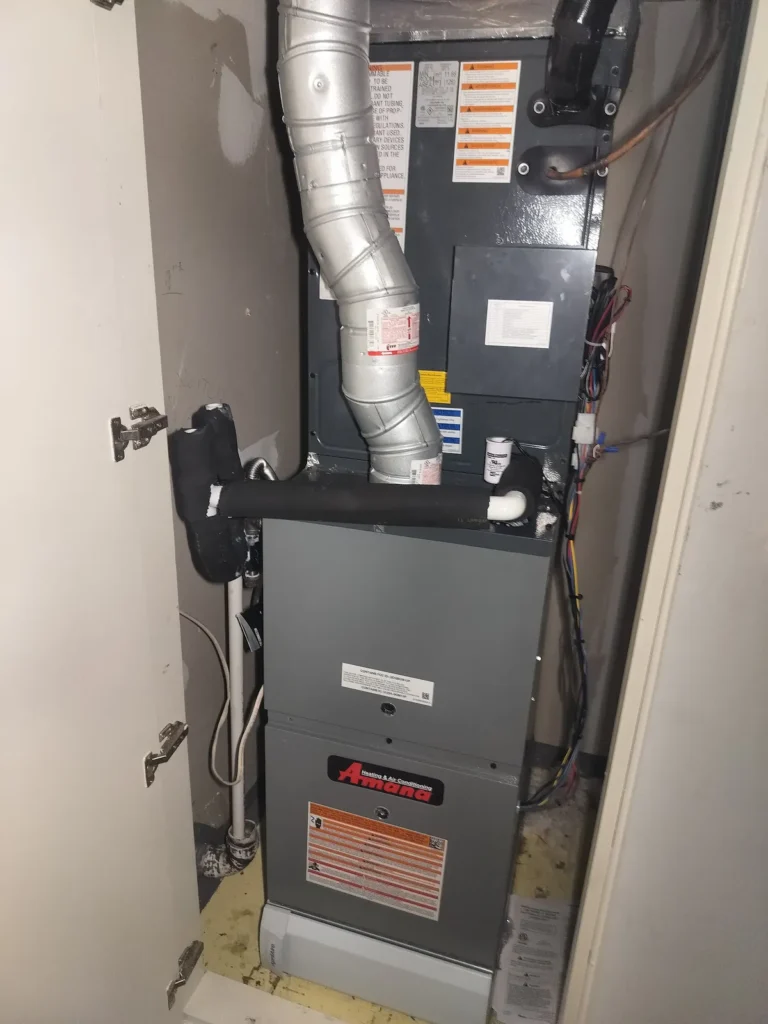
A heat pump is slightly cheaper to run than a standard 80% AFUE gas furnace in Richardson, and roughly even with a high-efficiency 95% AFUE furnace. The heat pump becomes the clear winner on monthly bills only when a home removes every gas appliance and stops paying the Atmos Energy customer charge.
The deciding factors, in order:
- Gas service fixed charge: about $300 a year, avoidable only by going all-electric.
- Furnace efficiency: an 80% furnace loses to a heat pump; a 95% furnace ties it.
- Your electric plan: Richardson is in the deregulated Oncor area, so your per-kWh rate can swing the result by $50 or more a year.
- Freeze events: a Uri-level cold snap shifts a single winter toward gas.
Methodology
How We Calculated Richardson Heating Costs
The comparison below uses public data for Richardson’s utilities and climate. Where no published number exists, we say so and show our assumption.
| Input | Value used | Source |
|---|---|---|
| Heating degree days (DFW Airport, 1991 to 2020 normals) | 2,218 per year | NWS Fort Worth |
| Normal January low | 36.1F | NWS Fort Worth |
| Dallas heating design temperature (99.6%) | 19.9F | FGIA, ASHRAE data |
| Electric rate (Dallas/Oncor median, July 2026, 1,000 kWh) | 16.6 cents/kWh | ElectricRates.org |
| Oncor delivery charge (since Aug 1, 2026) | $0.060295/kWh + $4.06/mo | BKV Energy |
| Atmos Energy gas cost, 2Q 2026 | $11.23 to $12.21 per Mcf | Railroad Commission of Texas |
| Atmos Uri cost recovery charge | $0.11/Ccf through about 2039 | Railroad Commission of Texas |
| Effective marginal gas price | $1.70 to $2.15 per therm | Our estimate from the rows above (no published Richardson figure) |
| Annual delivered heat for a typical gas-heated Texas home | about 19.5 MMBtu | Our calculation from EIA RECS 2020 |
Figures checked November 2026.
2026 Costs
Annual Heating Cost: Heat Pump vs Gas Furnace in Richardson
A typical Richardson home spends roughly $340 to $525 a year on heating energy, depending on equipment and rates. All dollar figures below are our calculations from the sourced inputs above.
| System | Annual energy used | Low rate | Mid rate | High rate |
|---|---|---|---|---|
| Gas furnace, 80% AFUE | 244 therms | $415 | $464 | $525 |
| Gas furnace, 95% AFUE | 205 therms | $349 | $390 | $441 |
| Heat pump, federal minimum (7.5 HSPF2) | 2,598 kWh | $390 | $431 | n/a |
| Heat pump, higher efficiency (8.1 HSPF2) | 2,381 kWh | $357 | $395 | n/a |
| Heat pump, good unit in DFW’s mild winter (assumed COP 2.8) | 2,041 kWh | $306 | $339 | n/a |
Gas rates: $1.70 / $1.90 / $2.15 per therm. Electric rates: 15 / 16.6 cents per kWh. Heat pump seasonal COP converted from HSPF2 (HSPF2 divided by 3.412). The COP 2.8 row is an assumption for North Texas, which is milder than the DOE rating region.
Add the fixed charge and the picture changes:
| Setup | Heating energy (mid) | Atmos customer charge | Total |
|---|---|---|---|
| 80% gas furnace + gas water heater | $464 | $300 | $764 |
| Heat pump + gas water heater | $395 | $300 | $695 |
| All-electric home with heat pump | $395 | $0 | $395 |
Water heating, cooking, and drying energy are excluded from this table. An all-electric home pays more on electricity for those appliances, so the true household savings is smaller than the $369 difference shown.
Climate
Why Richardson’s Climate Favors Heat Pumps
Richardson’s winters are mild by national standards, which keeps heat pumps in their most efficient operating range. DFW averages 2,218 heating degree days, and December through February supply about 69% of that total (January 582, February 413, December 528) per NWS Fort Worth.
What that means for a heat pump in Richardson:
- Most heating hours fall between 35F and 55F. Heat pumps deliver two to four units of heat per unit of electricity in that range.
- DFW averages about 29 freezing days a year. Most of those are overnight lows that recover by afternoon.
- The design low is 19.9F. How much backup heat a heat pump needs at that temperature depends on sizing, insulation, and ductwork.
- DOE says heat pumps can deliver up to three times more heat energy than the electricity they consume. A gas furnace tops out below 100% efficiency.
Winter Storms
What Happens to a Heat Pump During a Richardson Freeze?
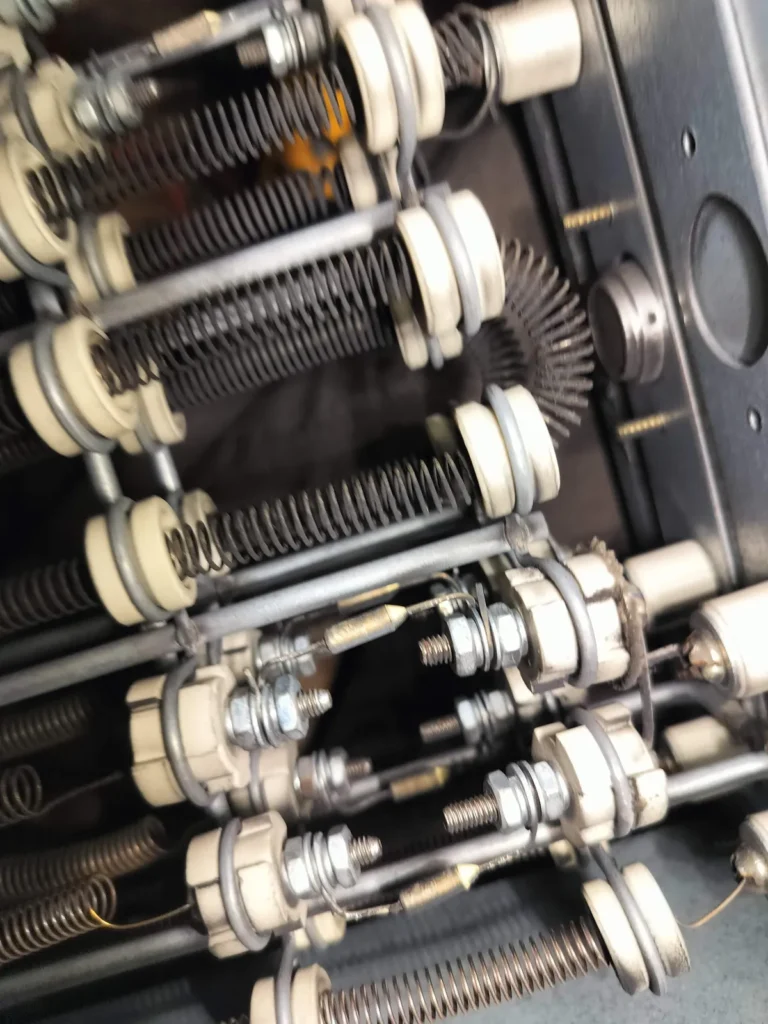
A heat pump keeps running during a Richardson freeze, but how much it leans on electric strip heat in the 20s depends on the house. Equipment sizing, insulation, and duct quality all change the answer, so there is no reliable rule for a given home. Strip heat costs about two to three times more per unit of heat. Winter Storm Uri pushed DFW to -2F on February 16, 2021, with 139 consecutive hours at or below freezing (NWS Fort Worth).
What a Uri-type event means for each system:
- Heat pump: strip heat carries the load, so a single extreme week can add a noticeable amount to that month’s electric bill. Our annual model does not include a Uri-level event. Matt Bruner, our technical reviewer, runs a cold-climate heat pump with no strip heat at all. It keeps his house warm on 15F snowy days, but only after he spray-foamed the attic, insulated the walls, and put in new windows. Before those upgrades, the same system couldn’t keep up on days below the 30s, and space heaters (basically the same thing as strip heat) were the only way to keep the house out of the high 50s.
- Gas furnace: keeps producing full heat, but still needs electricity for the blower and controls. During Uri, many Texas homes lost power, which shut down gas furnaces too.
- Both: Atmos customers are still paying for Uri. A $0.11/Ccf charge has been on every Atmos bill since October 2023 and is expected to run until about April 2039 (Railroad Commission of Texas).
Utilities
Richardson Utility Rates: Oncor and Atmos Energy
Richardson homes buy electricity from a retail provider of their choice, delivered by Oncor, and buy natural gas from Atmos Energy’s Mid-Tex division.
Electricity (Oncor service area):
- Median all-in plan rate was about 16.6 cents/kWh in July 2026, with the cheapest plans near 7.3 cents (ElectricRates.org).
- Oncor delivery charges are included in those all-in rates.
- Because you choose your plan, a heat pump owner on a low-rate plan saves far more than one on a high-rate plan.
Natural gas (Atmos Energy Mid-Tex):
- Residential customer charge: $25.03 a month. A 2026 GRIP interim increase of $10.59 was proposed, which would raise it to $35.62 (City of Corsicana resolution).
- Richardson approved an Atmos rate settlement that raised the typical residential bill about $8 a month (9.3%) starting October 2025 (Richardson Today).
- Texas residential gas averaged $19.42 per Mcf in 2025, up from $13.77 in 2021 (EIA).
Neighborhoods
Heat Pump vs Gas Furnace by Richardson Neighborhood
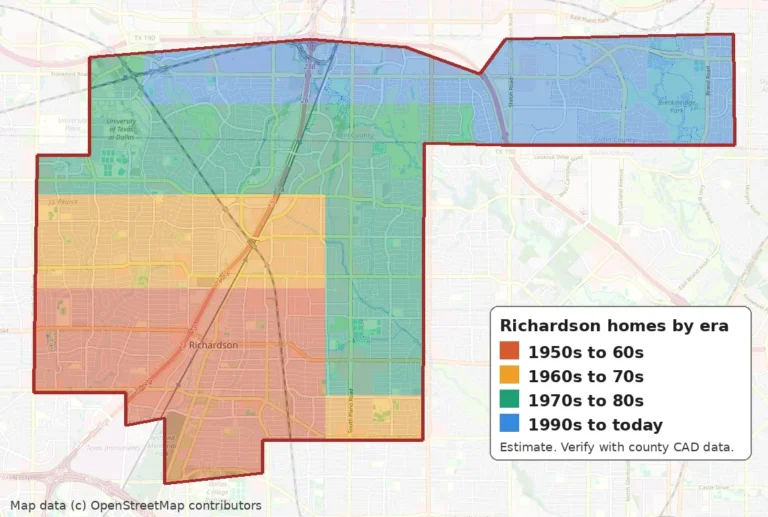
The right system depends on the house. Richardson’s housing stock is older than most DFW suburbs: the City of Richardson reports that 40% of homes were built in the 1970s, and the median build year for houses is 1975 (City-Data). In the Richardson ISD area, Census data showed about 57.5% of homes heat with electricity and 41.9% with utility gas (ProximityOne). Neighborhood names below match the City of Richardson’s official homeowner association list.
Richardson Heights
Richardson Heights is one of the city’s oldest postwar neighborhoods, in ZIP 75080 in west Richardson, with homes built starting in 1951 and a median size around 1,538 sq ft (Dustin Pitts). Some homes sit on pier-and-beam foundations. Neighbors share Heights Park, known locally as “Big Slide Park.”
What to check before choosing a system in Richardson Heights:
- Original gas furnaces in 70-year-old homes are often near or past replacement age, making a heat pump swap a natural decision point.
- Smaller square footage means a smaller heating load, which narrows the dollar gap between systems.
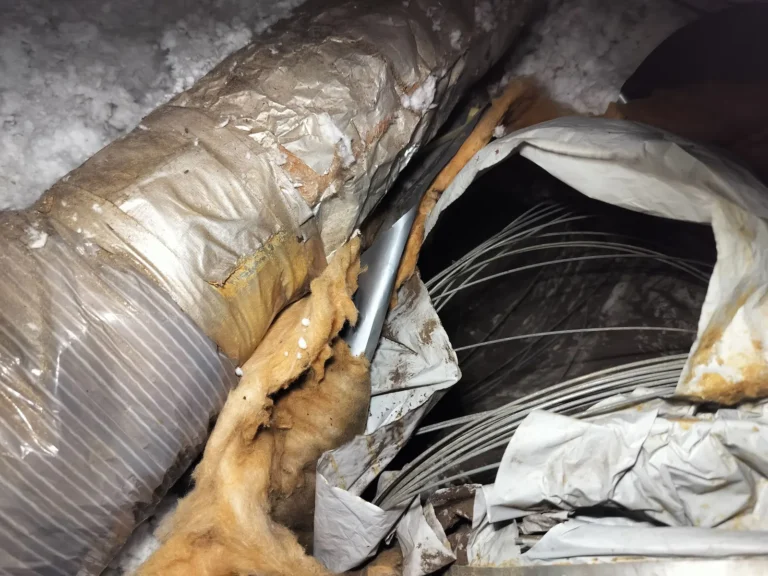
- Pier-and-beam crawlspaces and attic ductwork should be inspected for leaks before sizing either system.
Arapaho Heights and Waterview Preservation
Arapaho Heights is a west Richardson neighborhood of mostly updated 1950s homes, home to Arapaho Classical Magnet and an annual home tour (CultureMap Dallas). Waterview Preservation sits inside Arapaho Heights, with Spanish, Colonial, midcentury, and large two-story homes, and its east side backs onto a creek.
What to check:
- Remodels and additions often change the heating load, so the original equipment may be undersized or oversized.
- Two-story homes in Waterview may benefit from zoning or two separate systems.
- Updated kitchens with gas ranges keep the Atmos customer charge in place even after a heat pump install.
Canyon Creek
Canyon Creek is a 1960s and 1970s neighborhood in ZIP 75080 bordering Canyon Creek Country Club, with homes built from 1963 onward and a median size around 1,932 sq ft (Dustin Pitts). Pearce High School and Richardson North Junior High serve the area.
What to check:
- Larger homes carry a larger heating load, so efficiency differences show up more in dollars.
- Many original HVAC systems from this era have been replaced at least once; check the current furnace AFUE rating before comparing.
- A 95% AFUE furnace already in place narrows the case for switching on operating cost alone.
The Reservation
The Reservation is a west Richardson neighborhood of larger homes mixing originals, remodels, and new construction (CultureMap Dallas).
What to check:
- New builds may already have heat pumps or high-efficiency furnaces.
- Mixed original and new sections in remodeled homes can create uneven heating that equipment alone won’t fix.
Sherrill Park, Duck Creek, and Owens Park
These east and central Richardson neighborhoods are tied to the city’s green spaces: Sherrill Park Golf Course, Duck Creek Linear Park, and Owens Trail (Dustin Pitts). Much of the housing here dates to Richardson’s 1970s building boom.
What to check:
- 1970s homes commonly have original-era ductwork and attic insulation that limit any system’s efficiency.
- Older 80% furnaces are where a heat pump shows its clearest operating cost advantage.
Newer Richardson subdivisions: Cantera, Bridgewater Crossing, II Creeks
Cantera (around 2007), Bridgewater Crossing (Toll Brothers), and II Creeks are newer infill subdivisions (City of Richardson permit report).
What to check:
- Newer code construction means tighter envelopes and lower heating loads, which favors heat pumps.
- Builder-grade equipment may be at minimum efficiency; check the HSPF2 or AFUE label before deciding.
Other Richardson neighborhoods
Prairie Creek, Cottonwood Heights, Richland Park, University Estates North, Northrich, Yale Park, and Breckinridge Park Estates are also on the city’s official list. Check your home’s build year, size, and whether gas is connected before comparing systems.
Local Insight
What Competitors Don’t Tell You
Most heat pump vs furnace articles skip the line item that actually decides the Richardson comparison.
- The fixed gas charge outweighs the efficiency gap. The Atmos customer charge ($25.03 a month) costs more per year than the operating difference between a heat pump and a furnace. Some local articles quote a much higher figure; check your own Atmos bill.
- Dual fuel keeps the fixed charge. A dual-fuel system (heat pump plus gas backup) handles freezes well, but you still pay Atmos every month, which erases most of the savings argument.
- No independent study covers Richardson. The big documented savings in Texas are for replacing electric resistance heat: about $310 a year per ACEEE and $670 a year per NREL ResStock. For gas homes, Rewiring America says switching doesn’t save much on average.
- Gas prices have been rising. Texas residential gas cost 41% more in 2025 than in 2021 (EIA). If that trend continues, the heat pump’s lead grows.
Original Data
Original Data: Richardson Homeowner Bill Comparison
We are collecting before-and-after Atmos and electric bills from Richardson homeowners who switched from a gas furnace to a heat pump. Results will be normalized by heating degree days and published here with sample size and date range.
Switched systems in Richardson? Email your bills to info@richardsontxhvachub.com.
Installation
Installation Cost and Incentives in 2026
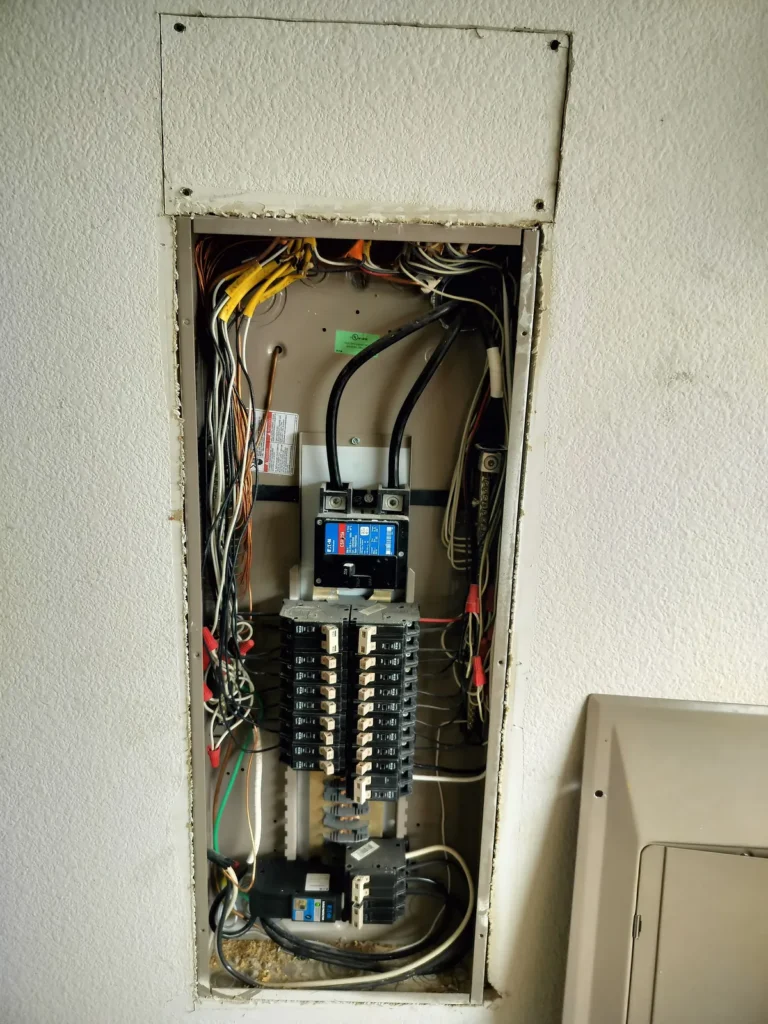
Installed cost matters more than operating cost for most Richardson homeowners, because the annual operating difference is small. Switching fuel types also adds cost. Going from a gas furnace to a heat pump means running new electrical wiring to the air handler, and older homes often need energy upgrades to avoid heavy strip heat use. In Matt Bruner’s experience, switching from gas to electric, or from an 80% to a 95% furnace, rarely saves money once the cost of the switch is counted.
- Federal 25C tax credit: ended for heat pumps and furnaces placed in service after December 31, 2025 (EnergySage).
- Oncor incentives: the 2026 Home Energy Efficiency program reportedly pays contractor-routed incentives of $2,000 to $3,400 per HVAC replacement depending on size (Energy Rebate Calculator).
- Texas HOMES and HEAR rebates: had not launched as of 2026 research.
- Installed price ranges: a heat pump and an 80% AFUE gas furnace cost about the same to install, per Matt Bruner. The extra parts a gas furnace needs are not a major part of the job, and heat pump equipment can run about $500 less. In our Richardson replacement cost data, a 3 to 5 ton heat pump system (heat pump plus air handler) runs about $10,000 to $17,000+, and a full split system with AC, coil, and gas furnace runs about $11,000 to $18,000+. Both ranges are estimates.
- Heat pumps also cool. If your AC is due for replacement, a heat pump replaces both the AC and furnace in one install.
Decision Guide
Which System Should You Choose?
Choose based on your home’s gas setup and equipment age, not efficiency ratings alone.
| Your situation in Richardson | Best fit |
|---|---|
| AC and furnace both near end of life, willing to go all-electric | Heat pump |
| AC failing, furnace is a newer 95% AFUE unit | Heat pump or AC replacement only; furnace savings are minimal |
| Gas water heater and range you plan to keep | Either; operating cost is close |
| Want maximum freeze resilience | Dual fuel, accepting the Atmos fixed charge |
| Older 80% furnace and high electric rate plan | Shop electric plans first, then compare |
FAQ
Frequently Asked Questions
Is a heat pump cheaper than gas in Richardson, TX?
A heat pump is slightly cheaper than an 80% gas furnace in Richardson and about even with a 95% furnace. Our model shows annual heating energy of about $339 to $431 for a heat pump versus $390 to $464 for gas at mid-range rates.
Will a heat pump raise my winter electric bill?
A heat pump will raise your winter electric bill, but your gas bill drops by more in most Richardson homes. Expect roughly 2,000 to 2,600 kWh of added winter electricity for a typical home, based on our model. Electric bills also get more consistent year round: still highest in summer, but fairly high in winter too.
Can a heat pump handle a Texas freeze like Uri?
A heat pump can keep a Richardson home warm in a freeze, but how much it relies on costlier electric strip heat depends on equipment sizing, insulation, and ductwork. Older, poorly insulated homes often need energy upgrades to avoid heavy strip heat use.
Do I still pay Atmos if I get a heat pump?
You still pay the Atmos customer charge if any gas appliance stays connected. Only removing all gas appliances eliminates the $25.03 monthly charge.
Is dual fuel worth it in Richardson?
Dual fuel is worth it mainly for freeze resilience, not savings. You keep paying the Atmos customer charge, so most of the operating cost advantage of a heat pump disappears.
Is there still a tax credit for heat pumps in 2026?
The federal 25C tax credit is not available for heat pumps installed in 2026. It ended for equipment placed in service after December 31, 2025. Oncor utility incentives may still apply through participating contractors.
Does my Richardson neighborhood affect which system I should choose?
Your neighborhood matters through home age and size. Older 1950s and 1960s homes in Richardson Heights or Arapaho Heights often have original ductwork and aging gas furnaces, while newer homes in Cantera have tighter construction that favors heat pumps.
Sources were checked November 2026. Rate figures change; verify against your own Oncor-area plan and Atmos Energy bill.