
Richardson, TX Troubleshooting Guide
AC Leaking Water Inside Your Richardson Home: Causes, First Steps and When to Call
If your AC is leaking water inside, turn it off at the thermostat and catch the drip with a bucket or towels; a slow drip near the indoor unit is usually a clogged drain you can manage until a tech arrives. If water is near outlets, the breaker panel, or the air handler’s wiring, or your ceiling is sagging or bulging, keep everyone away, cut power at the breaker only if you can reach it without touching water, and call for help right away.
By Richardson TX HVAC Hub | Last updated:
| 6 min read
Quick Answer
Key Takeaways
- An AC leaking water inside a home is most often caused by a clogged condensate drain line, which backs water up into the drain pan until it overflows.
- The first step for an AC leaking water indoors is to turn the system off at the thermostat, which stops the unit from producing more condensate.
- In Richardson homes with attic air handlers, AC leak water can travel along framing and show up as a ceiling stain several feet from the equipment.
- An AC that shuts off with water in the auxiliary pan usually means the float switch did its job. Do not bypass the switch to restart the system.
- Richardson adopted the 2021 International Codes, with local amendments, in 2023. Questions about drain routing or permits go to Richardson Building Inspection at 972-744-4180.
- A water leak alone rarely means an AC needs replacement. Most leaks trace to the drain, pan, pump, or a frozen coil.
Act Fast
What to Do Right Now If Your AC Is Leaking Water
Turn the AC off at the thermostat first. Then work through these steps:
- Turn the system off. Set the thermostat to off. The AC stops making condensate, so the leak slows or stops.
- Cut power if water is near electrical equipment. Switch off the AC breaker at the panel if you can reach it without standing in water. If the panel is wet or unsafe to reach, leave it alone and call 911. For a hazard on the utility side, contact Oncor.
- Check for a gas smell. Many Richardson attic and closet systems pair the AC coil with a gas furnace. If you smell gas, leave the home and call Atmos Energy or 911 from outside.
- Protect the area and photograph the damage. Move belongings, set a bucket under drips, and take photos before cleanup. Your insurer will want them.
- Keep people out from under a sagging ceiling. A bulging ceiling can hold a large amount of water. Do not puncture it yourself.
- Rule out a plumbing leak. If water keeps coming with the AC off, the source may be a supply line or water heater. Shut off the home’s main water valve. For meter or street-side problems, contact City of Richardson Water Utilities.
- Call a licensed HVAC contractor. Texas requires HVAC contractors to hold an ACR license from TDLR. Look up the license at tdlr.texas.gov before work starts.
Your First 10 Minutes: Checklist
- Safe shutdown: Set the thermostat to Off so the unit stops making condensate. Switch off the AC breaker only if you can reach the panel standing on dry ground.
- Protect belongings: Move furniture, rugs, and electronics away from the water. Set buckets and towels under drips.
- Document the leak: Photograph the leak, ceiling stains, drain pan, and outdoor drain outlet before cleanup. Note the time you found it.
- Stop and call a pro if: water is near electrical equipment, the ceiling sags, you see ice on the coil or lines, the leak continues with the AC off, or reaching the unit means an unsafe attic trip.
Common Causes
Why Does an AC Leak Water?
An AC leaks water when condensate cannot leave the system the way it was designed to. Air conditioners pull humidity out of indoor air. That moisture collects in a drain pan under the indoor coil and exits through a condensate drain line, either outdoors or to a plumbing drain. Any break in that path sends water into the home.
| Cause | What you may notice | Typical fix |
|---|---|---|
| Clogged primary condensate drain | Water around the indoor unit, full drain pan, outdoor drain outlet dry | Drain line cleared and flushed |
| Cracked or rusted drain pan | Steady leak even when the drain flows | Pan repaired or replaced |
| Loose or disconnected drain line | Water at a fitting or joint near the unit | Line reconnected or re-secured |
| Failed condensate pump | Pump reservoir full, unit leaking or shut off | Pump replaced |
| Frozen indoor coil | Ice on the coil or refrigerant lines, water after shutdown | Airflow or refrigerant issue diagnosed |
| Float switch tripped | AC will not run, water in auxiliary pan | Underlying backup found and fixed |
Where the Water Shows Up Tells You Something
Water around the indoor unit usually points to the drain, pan, pump, or a melting coil.
Water on a ceiling or wall in a Richardson home often comes from an attic air handler. Leak water can run along joists before it drips, so the stain may not sit under the equipment. A roof or plumbing leak can look the same, so do not assume the AC is the cause.
Water at an outdoor pipe is normal while the AC runs. A warning sign is an outdoor outlet that stops dripping while the indoor unit is wet. That pattern suggests a blocked line.
Symptom to Action: What You Can Check vs. What a Tech Diagnoses
Use this table to sort what you can safely observe from what needs a licensed technician.
| Symptom | What you can safely observe | Technician-only diagnosis |
|---|---|---|
| Overflowing drain pan | Water level in the pan, whether the outdoor drain drips, whether the float switch shut the AC off | Clearing and flushing the line, pan repair or replacement, pump testing |
| Visible ice | Ice on the coil or refrigerant lines, weak or warm airflow, a dirty filter | Refrigerant charge, airflow and blower checks, coil cleaning |
| Wet ceiling | Stain size and location, any sagging, whether it grows with the AC off | Tracing the water path from the attic air handler, ruling out roof or plumbing leaks |
| Recurring leaks | How often it happens, under what conditions, whether past cleanings helped | Drain slope and routing, pan condition, root cause of repeat clogs |
Homeowner Checks
Safe Checks a Homeowner Can Make
A homeowner can safely check these items with the AC turned off:
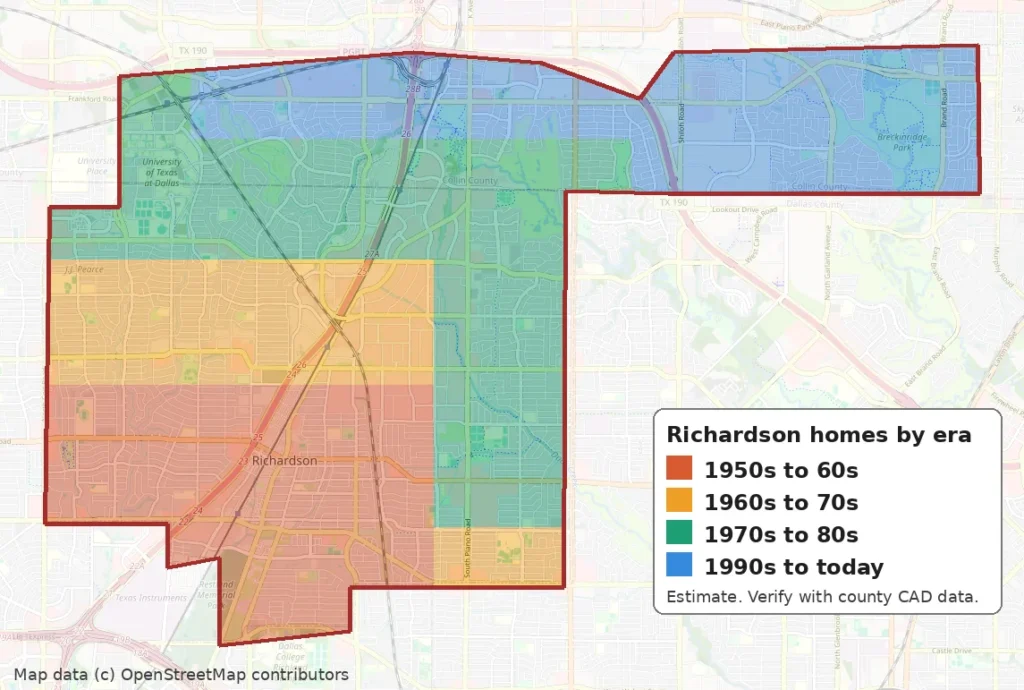
- Find your air handler’s location. Many Richardson homes, especially older ranch homes in neighborhoods like Richardson Heights and Canyon Creek, have the indoor unit in the attic or a hall closet. Knowing where it sits tells you where a leak is likely to show up.
- Look for water around the indoor unit. In a closet, check the floor and the base of the unit. In an attic, stay on the joists or decking. Check early in the day, since North Texas attics get dangerously hot by afternoon in summer.
- Check the secondary drain outlet. Many attic systems route a backup drain line to a pipe above a window or under the eaves. Water dripping from that pipe means the primary drain is clogged, even if nothing is leaking inside yet.
- Check the primary outdoor drain from the ground. It should drip steadily while the AC runs on a humid Richardson summer day. A dry outlet with a wet indoor unit points to a blocked line.
- Confirm the thermostat is calling for cooling. A blank or unresponsive thermostat can mean a float switch shut the system off to stop an overflow.
- Note recent cooling problems. Weak airflow, warm air, or ice on the indoor coil or refrigerant lines tells the technician to check for a frozen coil, not just a clogged drain.
- Photograph what you find. Pictures of the pan, the drain outlets, and any ceiling stains help the technician and support an insurance claim.
Leave These to a Technician
- Ice on the coil or refrigerant lines. Do not chip it off or open panels.
- Pouring chemicals into the drain line.
- Clearing the line with a wet/dry vacuum unless you know the drain layout. A badly reassembled line leaves the leak unresolved.
Safety Controls
What the Drain Pan and Float Switch Do
An auxiliary drain pan catches overflow if the primary drain backs up. Many systems pair it with a float switch that cuts power to the AC when water rises. The 2021 International Mechanical Code, which Richardson adopted in 2023, requires this kind of overflow protection where a backup could damage the building, such as an attic air handler above a ceiling.
When a Richardson homeowner finds the AC off and water in the auxiliary pan, the safety system is working. Bypassing the float switch restarts the leak and removes the protection.
Older Richardson homes may have equipment installed under earlier codes. A rusted pan, a missing float switch, or a secondary drain that empties nowhere visible is worth asking about during your next service visit. Long North Texas cooling seasons put the most strain on these parts from late spring through early fall.
A safety pan or switch reduces risk but does not guarantee zero damage. Water on a ceiling or wall still means turning the system off and calling a TDLR-licensed HVAC contractor.
Richardson Codes
Richardson Code and Permit Notes
Richardson adopted the 2021 International Codes, with local amendments, in 2023 (City of Richardson adopted codes). The 2021 International Mechanical Code covers condensate disposal and auxiliary overflow protection where a backup could damage the building.
The 2021 IMC also requires condensate to go to an approved location and bars discharge that creates a nuisance, such as onto a street or alley (2021 IMC, Chapter 3). Do not reroute a drain line based on a generic online guide.
For Richardson permit and inspection questions:
- Richardson Building Inspection: 972-744-4180 (department page)
- Contractor registration
- Online permits
Whether a repair needs a permit depends on the scope of work. A leak by itself does not mean a permit is required.
Decision Guide
When to Call an HVAC Professional
Call an HVAC technician promptly if any of these apply:
- Water is dripping through a ceiling or running down a wall.
- The auxiliary pan has water or the float switch shut the AC off.
- The leak returns after turning the system off and back on.
- Ice is visible on the indoor coil or refrigerant lines.
- The drain pan is cracked, rusted, or overflowing.
- You cannot safely reach or identify the source.
Before You Call: Technician Handoff Checklist
Collect these details safely before requesting service:
- Leak location: indoor unit, ceiling, wall, or secondary drain pipe
- Onset time: when you first noticed it and whether it is getting worse
- Cooling performance: normal, weak, warm air, or system shut off
- Visible ice: yes or no, and where
- Photos: leak area, drain pan, outdoor drain outlet, thermostat display, and any ceiling damage, taken without entering unsafe areas
FAQ
Frequently Asked Questions
Why is my AC leaking water inside the house?
A clogged condensate drain line is the most common reason an AC leaks water inside. Other causes include a cracked drain pan, a disconnected line, a failed condensate pump, or a frozen coil melting after shutdown.
Is it normal for my AC to drip water outside?
Yes, an AC dripping water from an outdoor pipe is normal while it runs. Water inside the home or around the indoor unit is not normal and should be checked.
Can I keep running my AC if it’s leaking?
No, turn the AC off if it is leaking water indoors. Running the system makes more condensate and spreads the damage.
Can a clogged AC drain cause a ceiling leak?
Yes, a clogged AC drain can cause a ceiling leak when the air handler or drain line sits above the ceiling. The drip may appear several feet from the actual source.
Why did my AC shut off and there’s water in the pan?
An AC that shuts off with water in the pan usually tripped its float switch. The switch prevents overflow. Have the drain checked instead of resetting or bypassing the switch.
Does a leaking AC mean I need a new unit?
Usually not. A leaking AC typically needs a drain, pan, pump, or coil repair. A technician can confirm the cause and repair options. For common repair costs and how to vet a contractor, see the AC repair in Richardson guide.
Sources
Sources and Related Guides
Get Help
A Local Resource for Richardson Homeowners
Richardson TX HVAC Hub is an independent guide to AC problems, local codes, and when to call a pro. We plan to partner with trusted, licensed Richardson HVAC contractors down the road. For now, the site is here to educate, not diagnose or repair.
Serving Richardson homeowners in Dallas and Collin county.